
Beyond the Sandwich Platter: Creative Corporate Breakfast & Lunch Ideas for 2026
By Waterfront Gourmet · 11/13/2026
The right amount of office catering is 1 to 1.25 sandwiches' worth of food per person at lunch (about 10–12 ounces total), 2 to 3 breakfast items per person in the morning, and a 10% buffer on headcount. Beyond quantity, the best corporate meals match the food to the meeting type, label every dish for dietary needs, and run on a repeatable ordering process. Here is how to do all of that without defaulting to the same turkey club platter.
Match the Menu to the Meeting Type
The fastest way to improve office catering is to stop ordering the same thing for every event. Different meetings have different constraints: time, noise, mess, and how much people need to focus.
| Meeting type | Best format | Avoid |
|---|---|---|
| Early client breakfast (8:00 a.m.) | Mini bagel and lox board, yogurt parfaits, fruit, coffee service | Greasy hot trays that make a bad first impression |
| All-hands lunch (30+ people) | Build-your-own bowls or sandwich stations with two lines | Single-file buffets that eat 20 minutes of the hour |
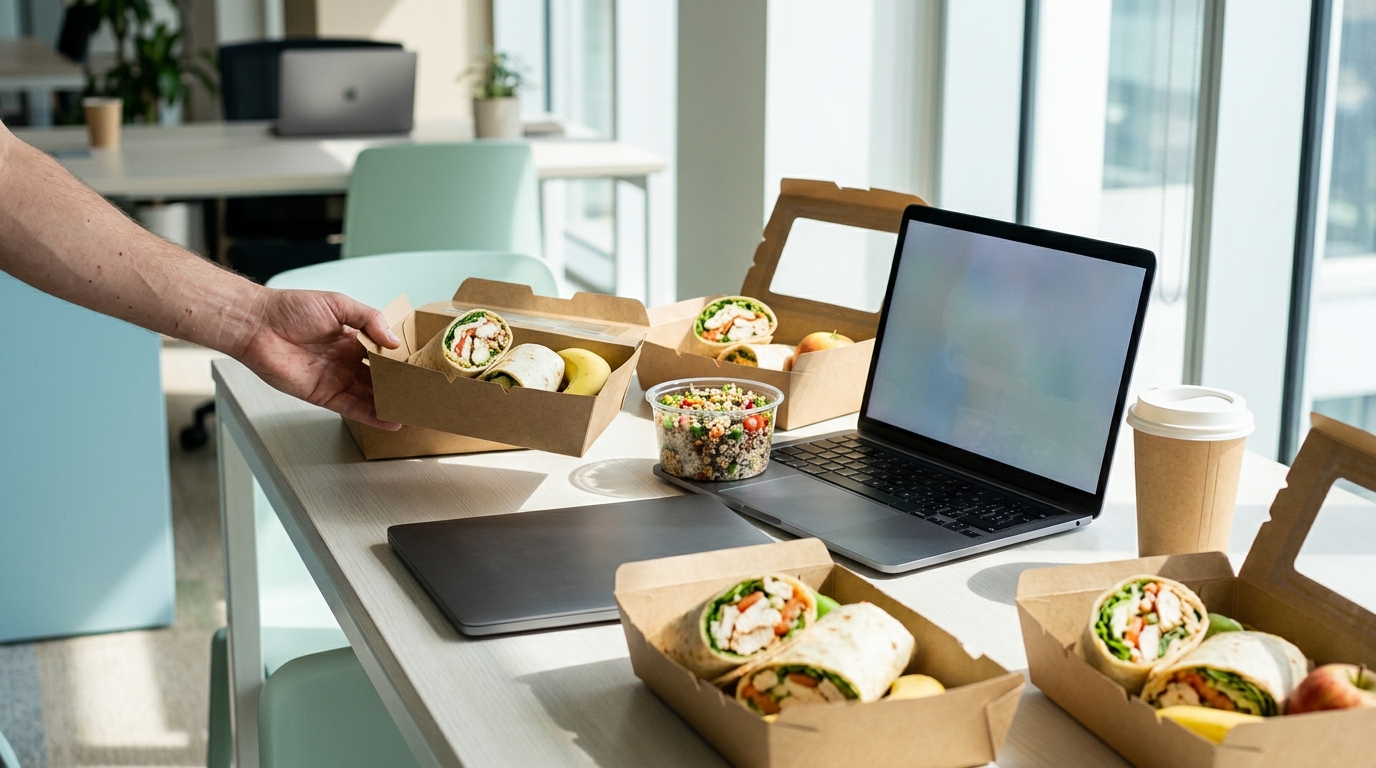
| Working lunch, laptops open | Individually boxed meals, wraps, grain salads | Messy sauces, anything needing a knife and fork |
| Training or workshop | Grazing boards and hand-held bites, served at breaks | Heavy pasta that triggers an afternoon slump |
| Board or executive meeting | Plated-style boxed lunches or composed salads with protein | Casual platters that look improvised |
A useful rule: the more people need to talk or type during the meal, the more the food should be hand-held and self-contained. The more the meal is the event itself, the more you can afford a station setup.
How Much Food to Order for an Office Lunch
Over-ordering wastes budget and under-ordering wrecks the meeting. Use these starting numbers and adjust for your crowd.
- Sandwiches and wraps: 1 to 1.25 per person, cut in halves or thirds so people can sample.
- Salads: about 1 cup of side salad per person, or one large entrée salad per 3 people if paired with sandwiches.
- Sides (chips, pasta salad, fruit): 4 to 6 ounces per person, one or two varieties.
- Hot entrées: 6 to 8 ounces of protein per person, plus 4 ounces of starch and 4 ounces of vegetables.
- Desserts: 1 small item per person, or 0.5 if lunch is already heavy.
- Beverages: 1.5 drinks per person at lunch. Add hot coffee and tea in the morning.
For breakfast, plan 2 to 3 items per person: one pastry or bagel, one protein or egg item, and fruit or yogurt. Coffee runs about 12 ounces per person, so a standard 96-ounce box serves roughly 8.
Then adjust. Add 10% to the headcount for walk-ins and seconds. Add another 10% for mostly male or athletic-skewing groups, or lunches that follow a morning workshop. Subtract 10 to 15% for events where only a fraction of invitees attend in person. Track the actual leftovers after each event and your numbers will be accurate within two or three orders.
Creative Breakfast Ideas That Beat the Bagel Tray
Bagels and pastries are fine, but they leave a protein gap that shows up around 10:30 a.m. Better breakfast catering balances sweet, savory, and filling.
- Breakfast sandwich minis: egg, cheese, and bacon or sausage on small rolls. They hold heat in boxes for about 45 minutes.
- Yogurt and granola bars: a self-serve setup with Greek yogurt, seasonal fruit, and two granolas covers vegetarians and light eaters at low cost.
- Savory egg bites and frittata squares: naturally gluten-free and easy to label.
- Lox and bagel boards: a Philadelphia classic that feels special for client meetings.
- Hot oatmeal bar: works well in winter, with brown sugar, nuts, and dried fruit on the side.
Ask your caterer about delivery windows. Hot breakfast items should arrive 15 to 20 minutes before the meeting, not at the start, so setup never overlaps with your first agenda item.
Lunch Ideas Worth Putting on the Calendar
Corporate lunch catering in Philadelphia has plenty of room beyond platters, especially with the city's deli and café traditions behind it. Try these formats:
- Build-your-own grain bowls: rice or farro base, two proteins, roasted vegetables, and three sauces. One setup handles vegan, gluten-free, and meat-eating guests.
- Soup and half-sandwich combos: a strong choice for cold months and small groups.
- Deli spreads with a twist: a hoagie-style spread with Italian roast pork or chicken cutlet options gives people something local to talk about.
- Mediterranean mezze: hummus, falafel, grilled chicken, pita, and salads. Filling, mostly plant-friendly, and easy to portion.
- Taco or burrito bar: works for large groups, but requires two serving lines above 40 people.
Handle Dietary Restrictions Without Making It Awkward
Roughly 10 to 15% of a typical office group needs some kind of accommodation, from vegetarian and vegan to gluten-free, dairy-free, nut allergies, and halal or kosher. The mistake is treating these as afterthoughts.
- Collect restrictions with the RSVP. A simple form field with checkboxes beats asking at the door.
- Order individually labeled meals for allergies. Serious allergies like peanuts or shellfish need separately packaged, sealed meals to avoid cross-contact.
- Make the default menu inclusive. If half your dishes are naturally vegetarian or gluten-free, you need fewer special orders.
- Require labels. Every dish should have a card listing major allergens. Ask your caterer to include them.
- Order 15 to 20% vegetarian or vegan. Those options tend to get chosen by many guests, not only those who need them.
Managing Budget and Ordering at Scale
Office catering management gets easier with a system. In Philadelphia, corporate lunches commonly fall in the $15–$30 per person range for delivered casual meals, with breakfast typically $8–$18. Premium or plated-style options run higher, so confirm pricing with your caterer.
Practical ways to control cost without cutting quality:
- Order 48 to 72 hours ahead for small groups and 5 to 7 days ahead for groups over 50. Rush fees can add 15 to 25%.
- Choose one premium item. Spend on a standout entrée and keep sides simple.
- Skip individual desserts in favor of a shared cookie or brownie platter.
- Set up a standing order. Weekly or monthly recurring meals often earn better pricing and priority scheduling.
- Use one point of contact. One person owning orders, headcounts, and invoices prevents duplicate orders and billing confusion.
For large office groups, ask about delivery logistics before you book: loading dock access in Center City buildings, elevator reservations, and whether setup staff are included. A great menu that arrives late at a building with a freight elevator schedule is still a failure.
A Simple Planning Checklist for Business Meeting Food
- Confirm headcount 48 hours before and add your 10% buffer.
- Pick the format based on meeting type, not habit.
- Collect dietary needs with the RSVP.
- Specify the delivery window and a contact at the building.
- Request utensils, napkins, serving tools, and labels in the order.
- Plan for leftovers: ask your caterer for to-go containers, or arrange a donation pickup.
Corporate Catering FAQ
How much food should I order for 20 people at an office lunch?
Order about 22 to 24 sandwiches or wraps, two large salads, 5 to 6 pounds of sides, and 30 drinks. That covers a 10% headcount buffer and a mix of appetites.
How far in advance should I book corporate catering in Philadelphia?
Book 48 to 72 hours ahead for groups under 25, and one week ahead for groups over 50 or events during busy seasons such as December and the start of the fall quarter.
What is the best food for a working lunch meeting?
Individually boxed meals, wraps, and grain salads work best. They are easy to eat while talking or typing and leave minimal mess.
How do I handle dietary restrictions for a large group?
Collect restrictions on the RSVP, order 15 to 20% vegetarian or vegan options, and request separately packaged meals for serious allergies. Ask the caterer to label every dish.
What does corporate catering cost per person?
Casual delivered lunches typically cost $15–$30 per person and breakfast $8–$18, depending on menu, service level, and group size. Ask for an itemized quote that includes delivery and setup fees.