
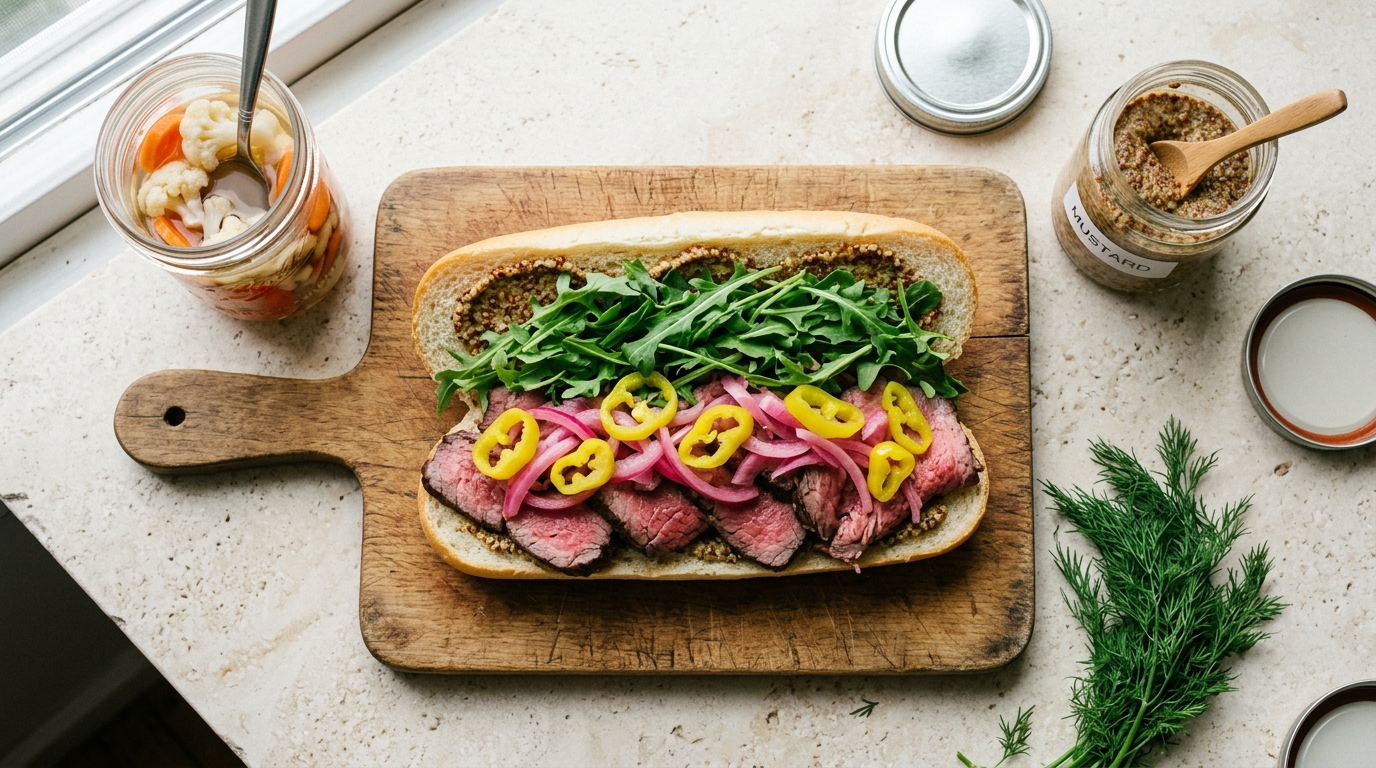
How to Build a High-Protein Deli Lunch in Philadelphia Without Sacrificing Flavor
By Waterfront Gourmet · 11/4/2026
A high-protein deli lunch in Philadelphia should deliver 30–40 grams of protein, stay under about 800 mg of sodium, and still taste like a real sandwich. The fastest way to get there: pick roasted whole-muscle meats like turkey breast, roast beef, or chicken, build on a sturdy base, and use flavor-heavy, low-sodium add-ons like mustard, pickled vegetables, and fresh herbs instead of extra cheese and mayo.
What Counts as a High-Protein Deli Lunch?
For most adults, 30–40 grams of protein at lunch keeps you full through the afternoon. A standard deli portion of 3 ounces of sliced turkey breast gives you roughly 15–18 grams. Double the meat and you hit the target without adding much else.
The trade-off is sodium. Deli meats are cured, brined, or seasoned, and sodium adds up quickly. The American Heart Association recommends an ideal limit of 1,500 mg per day and a maximum of 2,300 mg. A single sandwich built carelessly can use half of that. Protein and sodium have to be managed together.
Protein and Sodium: How Common Deli Meats Compare
Numbers vary by brand and preparation, so ask your deli for its nutrition sheet. These are typical ranges per 3-ounce serving:
| Deli Meat | Protein (approx.) | Sodium (approx.) | Best For |
|---|---|---|---|
| Oven-roasted turkey breast | 15–18 g | 450–700 mg | Everyday high-protein lunch |
| Roast beef | 16–20 g | 400–650 mg | Richer flavor, fewer add-ons needed |
| Chicken breast | 15–18 g | 400–600 mg | Mild base for bold toppings |
| Smoked ham | 12–15 g | 700–1,000 mg | Occasional pick, higher sodium |
| Salami or capicola | 10–14 g | 800–1,100 mg | Used sparingly as a flavor accent |
Whole-muscle meats sliced from a roast generally beat chopped, pressed, or formed products on both protein density and sodium. If a meat is labeled "low sodium," it typically contains 140 mg or less per serving under FDA labeling rules, though deli counters may not follow packaged-food labels. Ask directly.
How to Order Low-Sodium Deli Meat
You do not need to give up the deli counter. Use these specific moves:
- Ask for house-roasted meats. Delis that roast turkey and beef in-house control the brine and can tell you what went into it.
- Request a low-sodium or no-salt-added option. Many suppliers make one, and a good deli will tell you if it stocks it.
- Skip the stacked cured meats. One slice of salami adds punch. Four slices adds 1,000 mg.
- Watch the cheese. Provolone, American, and Swiss run 150–400 mg per slice. Fresh mozzarella and Swiss tend to sit lower than processed American.
- Treat the bread as a sodium source. A large roll can contain 400–600 mg alone.
Building Flavor Without Piling on Salt
This is where lunches either work or turn bland. When you cut salt, replace it with acid, heat, and texture:
- Acid: pickled red onions, banana peppers, a splash of red wine vinegar, or lemon juice cut through richness and make food taste seasoned.
- Heat: hot mustard, horseradish, or fresh jalapeños add intensity without sodium.
- Fresh herbs: basil, arugula, and cilantro bring aroma that your brain reads as flavor.
- Crunch: cucumber, shaved fennel, and raw bell pepper add contrast that makes a lighter sandwich satisfying.
- Smart spreads: swap mayo for hummus or mashed avocado to add fiber and healthy fat. Plain Greek yogurt mixed with mustard works as a high-protein sauce.
Pickles and olives are flavorful but high in sodium. Use them as a small accent, not the main event.
Gluten-Free Deli Options That Actually Work
Most deli meats are naturally gluten-free, but not all. Some brands use gluten-containing binders, flavorings, or broths. Look for a gluten-free label or ask for the ingredient list. For the base, you have three practical choices:
- Gluten-free bread or roll: works for a classic sandwich, but confirm it is stored and handled separately.
- Lettuce wrap or collard wrap: sturdy, cuts carbs, and holds 6 ounces of meat easily.
- Protein bowl: greens, roasted vegetables, a grain like quinoa, and sliced meat. This is the easiest way to hit 35+ grams of protein.
The real risk is cross-contact. Shared slicers, gloves, and cutting boards can transfer gluten. If you have celiac disease, ask the deli to clean the slicer and change gloves before preparing your order. Delis that cannot do this should be avoided for celiac-safe meals.
Allergen-Friendly Deli Ordering
The FDA recognizes nine major allergens: milk, eggs, fish, shellfish, tree nuts, peanuts, wheat, soy, and sesame. Delis touch nearly all of them. Sesame in rolls, soy in marinades, milk in cheese and dressings, and egg in mayo and salads are the common ones.
Use this checklist when you order:
- Name your allergy first, before you list your order.
- Ask whether meats are sliced on a shared slicer, and request a clean one.
- Ask about sauces and dressings. These hide more allergens than the meat does.
- For group orders, request individually labeled and wrapped items.
Allergen clarity matters even more for office orders, where one platter feeds twenty people with different needs. A good caterer labels every item and offers separate allergen-friendly boxes. If you are planning a team lunch, see our guide to Philadelphia business catering for how to handle mixed dietary needs.
Sample High-Protein Deli Builds
- Turkey and avocado bowl: 6 oz roasted turkey, mixed greens, avocado, cucumber, pickled onion, olive oil and lemon. About 38 g protein.
- Roast beef horseradish wrap: 5 oz roast beef, arugula, tomato, horseradish yogurt sauce, in a whole-wheat wrap or lettuce wrap. About 35 g protein.
- Chicken and hummus sandwich: 5 oz chicken breast, hummus, roasted peppers, spinach, on multigrain bread. About 36 g protein.
- Egg white and turkey breakfast sandwich: a good option for breakfast catering orders, with egg whites, sliced turkey, and spinach on an English muffin. About 25 g protein.
Ordering for a Group Without Losing Control of the Menu
When you order for a team, set the protein and sodium standards before you pick the menu. Choose two or three roasted meats, one plant-based option, and a gluten-free base. Put dressings on the side so people control their own sodium. Ask your caterer for nutrition information in writing. Reliable deli catering services in Philadelphia can supply ingredient lists and flag allergens on request.
Healthy Deli Lunch FAQ
How much protein should a deli lunch have?
Aim for 30–40 grams. That usually means 5–6 ounces of sliced turkey, chicken, or roast beef, or 3 ounces of meat plus Greek yogurt sauce, cheese, or beans.
Which deli meat is lowest in sodium?
Fresh roasted turkey breast, chicken breast, and roast beef usually run lowest, around 400–700 mg per 3 ounces. Ham, salami, and capicola run highest. Ask for a no-salt-added option if the deli carries one.
Is deli meat gluten-free?
Most plain deli meats are, but some contain gluten from binders, broths, or seasonings. Check the label or ask for ingredient information, and request a clean slicer if you have celiac disease.
What is the best low-carb way to order a deli sandwich?
Order it as a bowl or in a lettuce wrap. You keep the full portion of protein and drop the 400–600 mg of sodium that a large roll often contributes.
How do I order allergen-friendly deli food for an office?
Share the allergy list with your caterer in advance, request labeled individual portions, and ask for sauces on the side. Confirm how the kitchen prevents cross-contact on slicers and prep surfaces.