
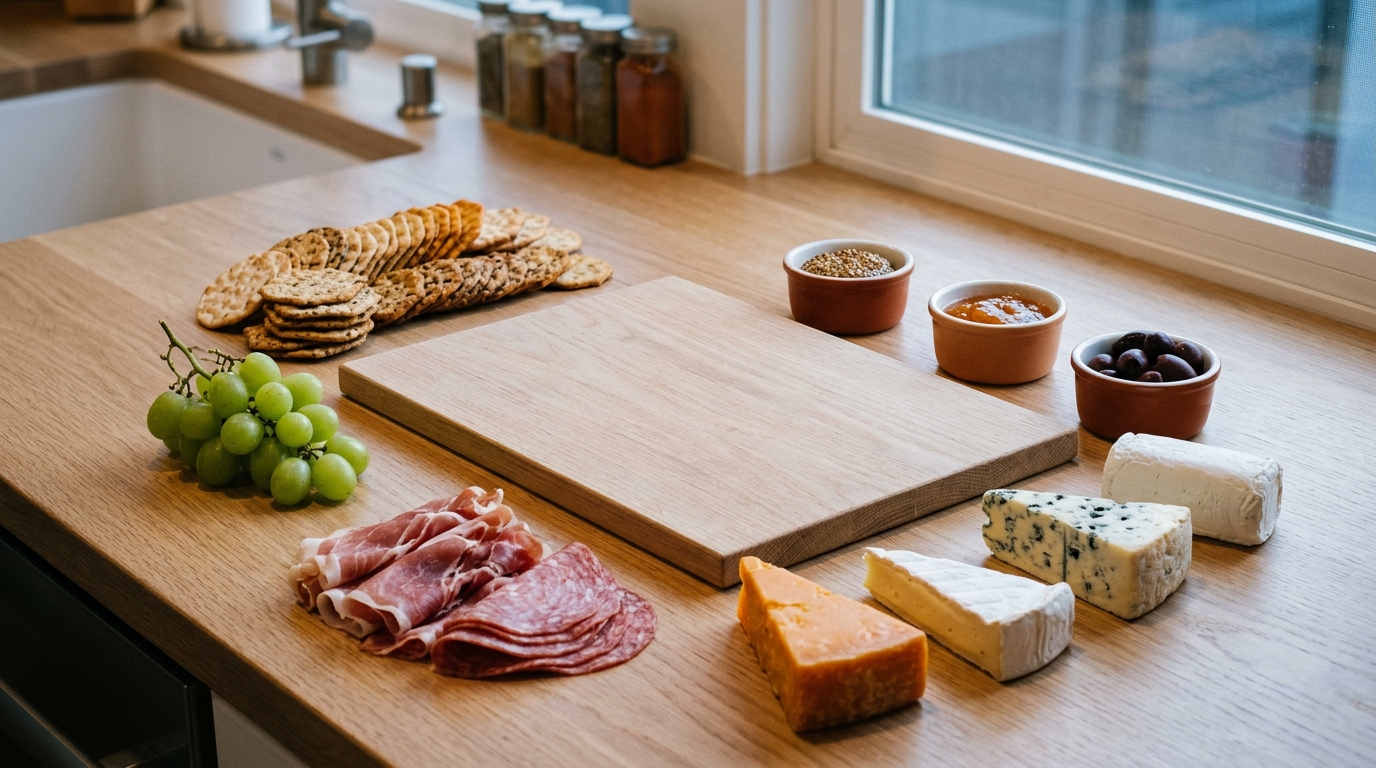
How to Build a Stunning Charcuterie Board: A Step-by-Step Visual Guide
By Waterfront Gourmet · 7/30/2026
A great charcuterie board starts with one anchor cheese, two to three cured meats, and at least four supporting elements - fruits, nuts, spreads, and crackers - arranged from largest to smallest items outward from the board's center. Master that framework and you can build an impressive spread in under 30 minutes, every time.
Whether you're hosting a Friday night gathering in Center City or putting together easy entertaining appetizers for a last-minute get-together, a well-built deli meat and cheese board is the single most flexible party appetizer you can make. Here's exactly how to do it.
What You'll Need Before You Start
Gather your supplies first. Trying to arrange a board while hunting for a cheese knife is a recipe for a chaotic spread.
- Board or surface: A wooden cutting board (at least 12 x 18 inches for 4–6 guests), a slate slab, or even a large sheet of parchment paper on a baking tray
- Small bowls or ramekins: 2–3 for jams, honey, olives, or mustard
- Cheese knives: One per cheese variety to avoid flavor crossover
- Toothpicks or cocktail picks: For folded meats and bite-sized items
Step 1 - Choose Your Cheeses (The Foundation)
Pick three to four cheeses that cover different textures and intensities. A strong board hits hard, medium, and soft in the same bite sequence.
- Hard aged cheese: Aged cheddar, manchego, or Parmigiano-Reggiano - these anchor the board visually and flavor-wise
- Semi-soft cheese: Gouda, Havarti, or Fontina - mild and crowd-friendly
- Soft/spreadable cheese: Brie, Camembert, or goat cheese - pairs perfectly with honey and fruit
- Blue or funky cheese (optional): Gorgonzola or Roquefort for adventurous guests
Plan on roughly 2 oz of cheese per person as an appetizer portion, or 4 oz per person if the board is the main event.
Step 2 - Select Your Deli Meats (The Star of the Show)
A well-sourced deli meat and cheese board leans on two or three cured meats with distinct flavor profiles. Variety keeps guests reaching back for more.
- Prosciutto or Serrano ham: Thin, silky, and salty - drape it loosely for a visual wow factor
- Soppressata or salami: Slice it thick and fan it out or fold it into quarters for easy grabbing
- Coppa or bresaola: Leaner options that add color contrast and a deeper, almost beefy flavor
- Pepperoni or spicy chorizo: A familiar crowd-pleaser that balances the more adventurous picks
Philadelphia's deli catering scene has long celebrated Italian-American cured meats - sourcing from a local deli catering service in Philadelphia gives you access to freshly sliced product that tastes noticeably better than pre-packaged options.
Step 3 - Add Supporting Elements (The Details That Make It)
Supporting elements fill visual gaps, balance rich meats and cheeses, and give guests contrast in every bite.
- Crackers and bread: Offer at least two types - a neutral water cracker and something seeded or herbed
- Fresh fruit: Red grapes, sliced strawberries, or fig halves add color and natural sweetness
- Dried fruit: Apricots, cranberries, or Medjool dates work beautifully with sharp aged cheeses
- Nuts: Marcona almonds, candied pecans, or spiced walnuts add crunch and fill corners
- Spreads and dips: Whole grain mustard, fig jam, honey, and cornichons hit four different flavor notes
- Olives and pickles: Castelvetrano olives and bread-and-butter pickles cut through fatty meats perfectly
Step 4 - Arrange the Board (The Visual Build)
This is where most people get overwhelmed. Follow this five-step arrangement sequence and the board practically builds itself.
- Place your ramekins first. Anchor small bowls of spreads and olives at different corners of the board - they're immovable once filled.
- Add your cheeses. Space them out so guests can reach each one without leaning across the board. Slice a portion of each cheese already to signal that it's okay to dig in.
- Lay down your meats. Fan salami slices, drape prosciutto in loose ribbons, and fold coppa into small rosette shapes using a wine glass rim as a mold.
- Fill gaps with crackers and fruit. Tuck crackers flat against cheese wedges and cluster grapes in open pockets.
- Scatter nuts, dried fruit, and garnishes last. Fill every remaining gap. Fresh herbs like rosemary sprigs or thyme add color and a bakery-shop aroma.
Wine and Cheese Pairing Guide: Quick Reference
Pairing wine with your board doesn't have to be complicated. Use this quick wine and cheese pairing guide as a starting point.
Cheese Type Best Wine Match Why It Works Aged Cheddar / Manchego Cabernet Sauvignon or Rioja Tannins cut through the fat and salt Brie / Camembert Champagne or unoaked Chardonnay Acidity and bubbles balance the creaminess Gouda / Havarti Pinot Noir or Grüner Veltliner Light fruit notes complement mild, buttery cheeses Goat Cheese Sauvignon Blanc Classic Loire Valley pairing - bright acidity matches tang Gorgonzola / Blue Cheese Sauternes or Port Sweet wine counterbalances intense saltinessFor a non-alcoholic option, sparkling water with citrus, a crisp apple cider, or a light kombucha all work beautifully alongside cured meats and fresh cheeses.
Scaling Up: From Home Board to Party Platter
Hosting more than eight guests? A personal board becomes a full party platter- and the math stays the same, just multiplied.
- 8–12 guests: Use a full sheet pan or two large boards side by side; plan for 4 cheese varieties and 4 meat options
- 20+ guests: Consider ordering through a professional Philadelphia business catering service or a local cafe catering provider for pre-built platters - the savings in prep time alone make it worthwhile for large events
Many Philly catering businesses offer drop-off deli catering services in Philadelphia specifically for office events, breakfast catering spreads, and corporate lunch setups throughout Center City. A professionally built platter from a deli catering service uses commercial-grade slicers and fresher bulk product, so the final result often looks sharper than what's achievable at home for large groups.
Three Common Charcuterie Board Mistakes to Avoid
- Building too early: Assemble your board no more than 45 minutes before guests arrive. Soft cheeses weep, crackers absorb moisture, and fresh fruit browns.
- Using cold cheese: Pull cheese from the refrigerator 30–45 minutes before serving. Cold cheese tastes flat - room temperature unlocks the full flavor.
- Overcrowding the board: Negative space is your friend visually, and guests need room to serve themselves without avalanching the whole spread.
How To Make A Charcuterie Board FAQ
How much food do I need for a charcuterie board for 10 people?
For 10 guests at an appetizer-only event, plan for approximately 2–3 oz of cheese per person (20–30 oz total), 2–3 oz of cured meat per person (20–30 oz total), and one cup of nuts, dried fruit, and crackers combined per two to three guests. If the board is the primary food source, double those quantities.
What is the best cheese to put on a charcuterie board for a crowd?
Aged cheddar is the safest crowd-pleaser - universally recognized, easy to slice, and compatible with almost every wine and cracker. Pair it with a mild semi-soft like Gouda for guests who prefer something less sharp, and add a soft brie for visual appeal and creamy contrast.
How far in advance can I make a charcuterie board?
Prepare all your components up to 24 hours ahead - sliced meats, portioned cheeses, filled ramekins, washed fruit - and store them covered in the refrigerator. Assemble the board itself no more than 45 minutes before serving to preserve cracker crunch and cheese texture.
Can I order a charcuterie-style platter from a Philadelphia catering company?
Yes. Several deli catering services in Philadelphia offer pre-built charcuterie and deli meat platters for corporate events, office breakfasts, and private parties across Center City. These platters typically include sliced meats, cheese selections, accompaniments, and serving tools, with order minimums and delivery windows that vary by provider.
What's the difference between a charcuterie board and a cheese board?
A charcuterie board is traditionally centered on cured and preserved meats - the word "charcuterie" comes from the French craft of preparing pork products. A cheese board focuses primarily on cheese varieties. In modern entertaining, the two overlap almost completely, and the term "charcuterie board" now commonly refers to any combination board featuring meats, cheeses, and accompaniments.