
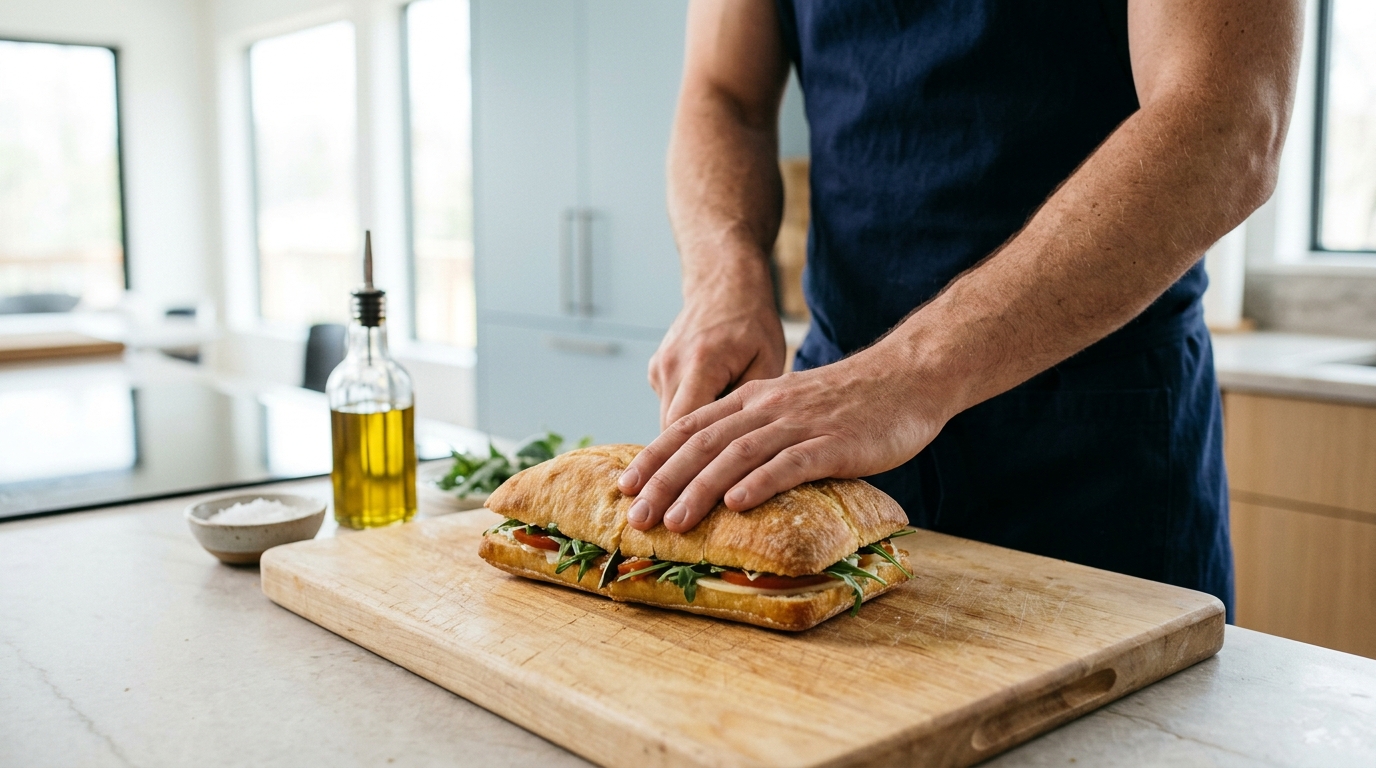
The Anatomy of a Perfect Sandwich: A Layer-by-Layer Guide to Flavor & Structure
By Waterfront Gourmet · 9/15/2026
A perfect sandwich follows a clear structural formula: sturdy bread on the outside, a fat-based barrier against moisture, protein in the center, vegetables layered for crunch and freshness, and seasoning distributed across every layer - not just dumped in the middle. Get that architecture right, and every bite delivers the same balanced experience from corner to corner.
Whether you're building a weekday lunch at home, sourcing deli catering services in Philadelphia, or feeding a corporate breakfast crowd in Center City, understanding the mechanics behind a great sandwich changes everything. Let's break it down layer by layer.
Layer 1: The Foundation - Choosing the Right Bread
Bread is structural engineering, not just a vehicle. The best bread for sandwiches balances three factors: crumb density, crust integrity, and moisture absorption. Here's how common bread types stack up:
- Hoagie roll / Italian roll: High crust integrity, holds up to wet fillings like roasted peppers and oil-dressed meats. The gold standard for classic Philadelphia-style deli sandwiches.
- Sourdough: Dense crumb, slight acidity that cuts through rich meats and fatty cheeses. Holds up well when toasted.
- Brioche: Soft, slightly sweet, best for lighter proteins like turkey or egg salad. Absorbs moisture quickly - serve immediately.
- Ciabatta: Open crumb structure creates pockets that hold condiments naturally. Great for grilled vegetables and fresh mozzarella builds.
- Rye: Dense, earthy, pairs naturally with cured meats like pastrami and corned beef. The classic deli choice for a reason.
- Whole wheat or multigrain: Reliable for catering - stable, familiar, and widely accepted by mixed groups.
The rule: Match bread density to filling weight. Heavier, wetter fillings need denser bread with a tighter crumb. Lighter fillings can go on softer breads.
Layer 2: The Moisture Barrier - Fat-Based Condiments First
This is the most technically important step that most home sandwich builders skip. Applying a fat-based condiment - mayo, butter, aioli, or a cream cheese spread - directly to the inner bread surface creates a moisture barrier. Without it, juices from tomatoes, pickles, or dressed greens soak into the bread within minutes, producing a soggy structure.
Apply the fat-based layer edge to edge, all the way to the crust. A thin, even coat on both inner surfaces is more effective than a thick glob in the center.
Sauce-to-meat ratio: A well-constructed 6-inch sandwich needs roughly 1 to 1.5 tablespoons of fat-based condiment total, split between both bread surfaces. More than 2 tablespoons and the sandwich becomes slippery; less than 0.75 tablespoons and you lose the moisture barrier entirely.
Layer 3: The Flavor Layer - Secondary Condiments & Spreads
Once your fat barrier is in place, secondary condiments go on top of it - not directly on the bread. These include mustard, hot sauce, pesto, tapenade, or vinegar-based dressings. Layering them over the fat barrier keeps their acidity from penetrating the bread while still delivering intense flavor.
Secondary condiments should contrast the primary fat layer. Pairing examples that work well:
- Mayo + whole grain mustard
- Butter + horseradish cream
- Aioli + roasted red pepper spread
- Cream cheese + everything bagel seasoning + hot honey
Layer 4: The Protein - Building the Center Mass
Protein goes directly in the center of the sandwich for one reason: structural balance. A center-weighted sandwich holds its shape when cut and distributes mass evenly so the bread-to-filling ratio stays consistent in every bite.
For catering for businesses in Center City Philadelphia, where sandwiches are often pre-built and held for 30 to 90 minutes before service, protein choice matters more than most people realize. Here's a quick comparison:
Protein Hold Time (pre-built) Best Bread Pairing Notes Roast beef Up to 90 min Hoagie roll, sourdough Releases minimal moisture Smoked turkey Up to 2 hours Multigrain, ciabatta Dry deli cut holds well Tuna salad 30–45 min max Toasted sourdough High moisture - toasted bread essential Egg salad 30 min max Rye, whole wheat Serve cold, assemble close to service Grilled chicken Up to 60 min Ciabatta, brioche Slice thin for even layering Fresh mozzarella + tomato 20 min max Ciabatta High moisture - build last-minute onlySlice deli meats thin and fold rather than stack flat. Folded slices create air pockets that improve texture and allow condiments to permeate through the protein layer instead of sitting on top of it.
Layer 5: Cheese - Placement Matters
Cheese acts as a secondary barrier and a binding agent. Place cheese directly against the protein, not against the bread. When cheese sits next to bread, it can absorb moisture and become rubbery. Against warm or room-temperature protein, it softens slightly and adheres to the filling, holding the sandwich together when cut.
For hot or toasted builds, place cheese on top of the protein before applying any wet toppings - the heat melts it into a cohesive layer rather than a separate slab.
Layer 6: Crunchy Vegetables - The Texture Counterpoint
Lettuce, shredded cabbage, or sliced cucumbers go directly above the cheese and protein layer. These crunchy elements provide the textural contrast that makes a sandwich satisfying rather than monotonous. Structurally, they also act as a cushion that prevents heavy toppings above from compressing the protein.
Sandwich layering technique for vegetables: Always layer greens below tomatoes, onions, and pickles. If you place wet vegetables - tomato slices, pickled peppers, banana peppers - directly on bread, they bypass the fat barrier and cause rapid sogginess. The lettuce absorbs excess juice from those wet toppings and distributes it slowly, buying you significantly more structural hold time.
Layer 7: Wet Toppings - Tomatoes, Pickles, and Dressed Items
Tomatoes, pickles, roasted peppers, and vinegar-marinated vegetables go last, on top of the crisp greens. Pat tomato slices dry with a paper towel before placing them - a single tomato slice can release up to a teaspoon of liquid into a sandwich over 20 minutes.
If you're building breakfast catering platters or deli spreads meant to be served buffet-style, keep wet toppings on the side and label them clearly. This preserves bread integrity for guests who arrive at the end of a service window.
The Final Touch: Seasoning Every Layer
A gourmet sandwich isn't just about ingredient quality - it's about seasoning at every level. Add a pinch of flaky salt and cracked black pepper directly on the tomato layer and on the protein. Drizzle a small amount of quality olive oil on the inside of the roll before the fat barrier on Italian-style builds. A few drops of red wine vinegar on the greens add brightness without soaking the bread.
The difference between a good sandwich and a great one is usually five or six small seasoning decisions distributed across the layers - not one heavy-handed addition.
Putting It All Together: The Ideal Layer Order (Top to Bottom)
- Top bread (fat barrier + secondary condiment on inside)
- Wet toppings (tomato, pickles, peppers)
- Crunchy greens (lettuce, shredded cabbage, arugula)
- Cheese
- Protein (folded, centered)
- Bottom bread (fat barrier + secondary condiment on inside)
This order means the heaviest, most moisture-generating components are cushioned from the bread on both sides. Every element has a structural job, not just a flavor role.
If you're working with a Philadelphia catering company to build a café-style catering spread for your office, sharing these structural guidelines with your caterer produces noticeably better results - especially for pre-built, held platters where moisture management is the difference between a successful lunch and a soggy mess.
What is the best bread for sandwiches that will be made in advance?
For make-ahead sandwiches, hoagie rolls, sourdough, and dense multigrain breads hold up best. Their tight crumb and firm crust resist moisture absorption for 60 to 90 minutes when a proper fat-based moisture barrier (mayo, butter, or aioli) is applied edge to edge on both inner surfaces before any wet fillings are added.
What is the correct sauce-to-meat ratio for a sandwich?
A standard 6-inch sandwich needs 1 to 1.5 tablespoons of fat-based condiment total, split evenly between both bread surfaces. Secondary condiments like mustard or pesto add another 0.5 to 1 teaspoon combined. More than 2 tablespoons of total condiment on a single sandwich creates a slippery structure and overpowers the protein.
Where does cheese go in a sandwich?
Cheese goes directly against the protein, not against the bread. This placement allows the cheese to soften against the filling, bind the layers together when the sandwich is cut, and avoid absorbing bread moisture that causes a rubbery texture.
How do you keep a sandwich from getting soggy?
Apply a fat-based condiment edge to edge on both inner bread surfaces before any other layer. Place wet toppings like tomato and pickles above a layer of crisp greens, never directly on the bread. For catered or pre-built sandwiches, pat tomatoes dry before assembly and keep any high-moisture toppings on the side until service.
What makes a gourmet sandwich different from a basic sandwich?
Gourmet sandwiches apply intentional seasoning at every layer - salt and pepper on the protein, a drizzle of quality oil on the bread, acid (vinegar or citrus) on the greens - rather than relying on condiments alone. They also match bread density to filling weight, fold rather than flat-stack deli meats to create texture, and balance fat, acid, salt, and crunch across every bite from edge to edge.