
The High-Protein Deli Lunch: How to Order for Muscle Gain and Satiety
By Waterfront Gourmet · 9/22/2026
The High-Protein Deli Lunch: How to Order for Muscle Gain and Satiety
A high-protein deli lunch delivers 30–50 grams of protein per meal when you choose the right meats, bases, and toppings - no meal prep required. Whether you're eating at a Philadelphia deli counter or ordering catering for your office in Center City, knowing how to navigate the menu means you walk away full, fueled, and on track with your goals.
This guide breaks down exactly how to build a high-protein deli order for muscle gain and lasting satiety - including smart swaps for gluten-free, dairy-free, low-sodium, and keto needs, plus specific guidance for deli options for diabetics.
Why the Deli Counter Is a Protein Powerhouse
Deli meats are among the most calorie-efficient protein sources available at lunch. A standard 3-ounce serving of turkey breast contains roughly 18–20 grams of protein with under 5 grams of fat. Roast beef hits similar numbers with slightly higher fat. Pair two or three of those portions with the right base and you're well into the 40-gram range - the threshold many sports nutrition experts associate with maximizing muscle protein synthesis per meal.
The challenge isn't the protein itself. It's navigating bread, cheese, spreads, and sodium levels when you have specific dietary needs. Here's how to do it strategically.
Best High-Protein Deli Meats: A Comparison
Not all deli meats are created equal. Here's a quick comparison of common options to guide your high protein deli order:
- Turkey Breast (oven-roasted): ~20g protein per 3 oz, low fat, low sodium versions available - top pick for lean gains
- Roast Beef: ~22g protein per 3 oz, moderate fat, higher iron content - excellent for active individuals
- Chicken Breast (grilled/sliced): ~21g protein per 3 oz, very low fat - ideal for dairy-free deli choices when you skip cheese
- Ham (black forest or honey): ~16g protein per 3 oz, but sodium can run 700–900mg per serving - watch portions if you're managing blood pressure
- Tuna or Egg Salad: ~14–18g protein per half-cup, but fat and calorie content varies widely by preparation
- Pastrami: ~18g protein per 3 oz, higher saturated fat - better as an occasional choice than a daily staple
Building a Gluten-Free Deli Sandwich
Gluten-free sandwich options at the deli come down to two decisions: the base and cross-contamination awareness. Most deli meats are naturally gluten-free, but some flavored or pre-marinated options use wheat-based fillers or soy sauce. Always ask your deli staff to confirm the ingredient list on any seasoned or specialty meat.
For the base, your best gluten-free options are:
- Certified gluten-free bread or wraps (many Philadelphia delis now stock these)
- Large lettuce wraps using romaine or butter lettuce - sturdy enough to hold a full deli build
- Rice cakes as an open-face option for lighter appetites
- Grain bowls built on a rice or quinoa base with sliced deli meat on top
Request that your deli counter staff change gloves and use a clean knife before building your order if you have celiac disease or serious gluten sensitivity. Most reputable Philadelphia catering companies and local delis are accustomed to this request.
Dairy-Free Deli Choices That Still Taste Great
Skipping cheese doesn't mean skipping flavor. Dairy-free deli choices actually open up a cleaner protein-to-calorie ratio because cheese adds 100–120 calories per slice with minimal additional protein benefit compared to adding another ounce of meat.
Flavor replacements for dairy-free builds:
- Hummus or avocado spread- adds healthy fat and creaminess
- Mustard (Dijon or whole grain)- zero dairy, big flavor boost
- Olive tapenade- rich, savory, and completely dairy-free
- Roasted red peppers- sweet and smoky without any cream-based ingredient
- Dairy-free pesto- increasingly available at deli counters across Philadelphia
Low Sodium Deli Meat Options
Sodium is the trickiest variable at the deli counter. Standard deli meats can carry 400–900mg of sodium per 3-ounce serving, which stacks up fast if you're building a full sandwich. People managing hypertension, kidney health, or heart conditions should aim to keep total daily sodium under 1,500mg based on American Heart Association guidance.
Low sodium deli meat options to look for:
- "Low sodium" or "no salt added" turkey breast - available from brands like Boar's Head at many Philadelphia delis
- Freshly roasted and sliced chicken or beef prepared in-house - significantly lower sodium than pre-packaged options
- Tuna prepared fresh with minimal added salt
- Avoid: bologna, salami, pepperoni, and most smoked meats - these regularly exceed 600mg per single serving
When ordering deli catering services in Philadelphia for a corporate event, you can request low-sodium meat selections in advance. Most established Philadelphia business catering providers accommodate this with 24–48 hours' notice.
How to Order a Keto Deli Sandwich
A keto deli sandwich eliminates bread entirely and maximizes fat and protein. The goal is to stay under 20–30 grams of net carbs for the full meal. Here's a framework that works:
- Base: Large lettuce wrap or a "meat wrap" where a thin-sliced deli meat like turkey acts as the outer layer
- Protein: 4–6 oz of roast beef, turkey, or chicken
- Fat: Full-fat cheese (provolone, Swiss, or cheddar), avocado, or olive oil drizzle
- Vegetables: Spinach, cucumbers, tomatoes, pickles, roasted peppers - all keto-friendly
- Condiments: Mustard, mayo, or olive tapenade - skip any honey-based sauces or sweet vinaigrettes
A well-built keto deli sandwich in this format delivers 35–45 grams of protein, 20–30 grams of fat, and fewer than 8 grams of net carbs. That's a genuinely satisfying, muscle-supporting meal that keeps blood sugar stable for hours.
Deli Options for Diabetics
Deli options for diabetics center on controlling glycemic load while keeping protein high. The primary concern is the bread - standard white and wheat sandwich rolls can spike blood glucose sharply. Beyond the base, watch for sweet marinades, honey-glazed meats, and sugary spreads.
Diabetes-friendly deli order strategy:
- Choose a low-glycemic base: thin-sliced whole grain bread (1 slice open-face), lettuce wrap, or a grain bowl with legumes
- Stick to plain roasted meats - oven-roasted turkey, chicken breast, or plain roast beef over honey ham or glazed options
- Add fiber-rich vegetables: spinach, cucumbers, tomatoes, peppers - these slow glucose absorption
- Use mustard, vinegar, or olive oil instead of mayonnaise-based or sweet sauces
- Pair with a protein-heavy side like a hard-boiled egg or small portion of bean salad rather than chips or pasta salad
A well-constructed deli meal for blood sugar management delivers steady energy over 3–4 hours without a post-lunch crash - which is exactly what productivity-focused catering for businesses in Center City Philadelphia should prioritize.
Protein Stacking: The Simple Rule for Muscle Gain
For muscle gain, aim for at least 0.7–1 gram of protein per pound of bodyweight daily. A single deli lunch should contribute 30–50 grams of that total. The easiest way to hit that target without overeating calories: stack two lean meats rather than loading up on one.
Example high-protein deli build:
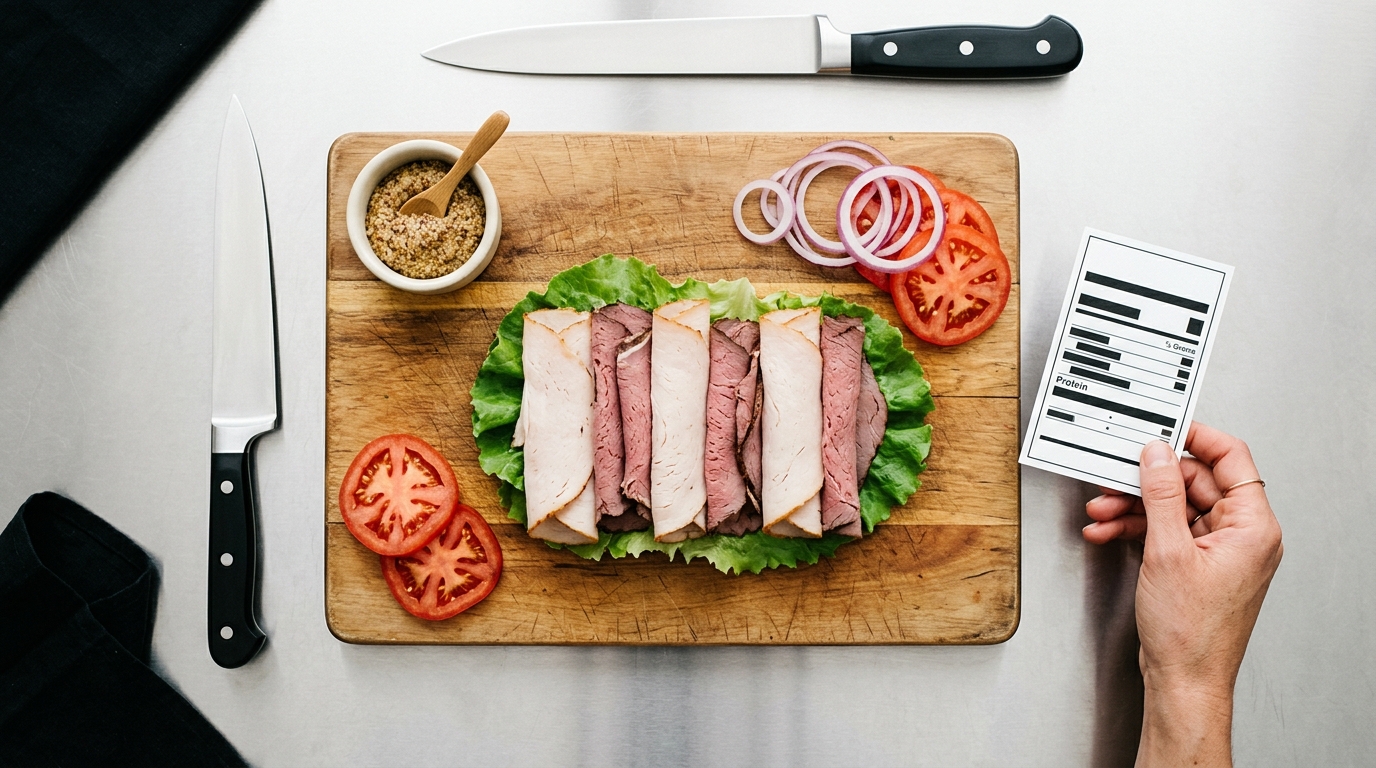
- 3 oz oven-roasted turkey + 2 oz sliced chicken breast = ~36g protein
- Lettuce wrap base = 0g net carbs, no calorie cost
- 1 oz provolone (or skip for dairy-free) = 6–7g additional protein
- Mustard, spinach, roasted peppers, cucumbers
- Total: ~40–43g protein, under 500 calories
That's a legitimate muscle-building lunch that takes five minutes to order and costs about what you'd pay for a standard sandwich - with far better nutritional return.
Ordering High-Protein Deli Catering for Your Team
If you're coordinating breakfast catering or lunch catering for a Philadelphia business, high-protein builds are increasingly the crowd-pleasing default. Offering a protein-forward deli spread - with clearly labeled gluten-free, dairy-free, low-sodium, and keto options - keeps your whole team satisfied without requiring separate specialty orders.
Most reputable Philadelphia catering companies that specialize in cafe-style or deli catering will work with you to label dietary options clearly and separate serving utensils for allergen-sensitive items. Ask for it explicitly when booking.
Frequently Asked Questions
What deli meats are highest in protein per ounce?
Roast beef, turkey breast, and sliced chicken breast are the highest-protein deli meats, delivering 6–7.5 grams of protein per ounce. Pastrami and ham follow at 5–6 grams per ounce but carry higher sodium and fat content. Stacking two of the lean options is the fastest way to build a 40-gram protein lunch.
Are there genuinely good gluten-free sandwich options at a deli?
Yes. Lettuce wraps, certified gluten-free bread, and grain bowls are all solid gluten-free sandwich options available at most full-service delis. The key is confirming that any seasoned or specialty deli meats don't contain wheat-based binders - ask staff before ordering, and request clean utensils if you have celiac disease.
Which deli meats are lowest in sodium?
Oven-roasted turkey breast labeled "low sodium" or "no salt added," freshly roasted in-house chicken, and fresh-made tuna are your best low sodium deli meat options. Smoked meats, bologna, salami, and pepperoni consistently carry the highest sodium counts and are best avoided by anyone managing blood pressure or kidney health.
Can a deli lunch work for a keto diet?
Absolutely. A keto deli sandwich built on a lettuce wrap or using thin-sliced meat as the outer layer - loaded with roast beef or turkey, full-fat cheese, avocado, and mustard - delivers 35–45 grams of protein and fewer than 8 grams of net carbs. It's one of the most practical keto meals available without any cooking.
What should people with diabetes order at a deli?
Deli options for diabetics should prioritize plain roasted meats (no sweet glazes), low-glycemic bases like a single slice of whole grain bread or a lettuce wrap, fiber-rich vegetables, and oil or mustard-based condiments. Avoiding honey ham, sweet sauces, and white bread rolls keeps the glycemic load low while still delivering a satisfying, protein-rich meal.